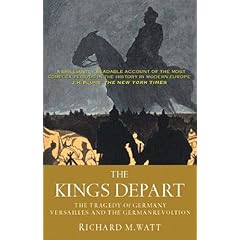
What with last November being the anniversary of the beginning of the 1918-19 German Revolution, I was recommended this book as a good introduction to the events of that period.
What this book really is, though, is a book about the treaty of Versailles, that has to spend a considerable portion of its contents explaining the revolution in Germany and also other events, particularly in Poland and Hungary around this time. To be honest though, I actually found the bits on the creation of the treaty interesting too as things which are relevant to my dissertation on Truth Commissions and War Tribunals cropped up here too.
The book is not a complete history of the German Revolution, but rather describes the main events and discusses some of the fundamental driving forces which does serve very well as an introduction to the topic. However, Watt is not a Marxist and there really isn’t a serious discussion of the tactics, and the mistakes of the German Communist Party and its allies.
Nevertheless I would recommend the book as an introduction to the events of the German Revolution, but also for anyone interested in studying the creation of the Versailles peace treaty.
What this book really is, though, is a book about the treaty of Versailles, that has to spend a considerable portion of its contents explaining the revolution in Germany and also other events, particularly in Poland and Hungary around this time. To be honest though, I actually found the bits on the creation of the treaty interesting too as things which are relevant to my dissertation on Truth Commissions and War Tribunals cropped up here too.
The book is not a complete history of the German Revolution, but rather describes the main events and discusses some of the fundamental driving forces which does serve very well as an introduction to the topic. However, Watt is not a Marxist and there really isn’t a serious discussion of the tactics, and the mistakes of the German Communist Party and its allies.
Nevertheless I would recommend the book as an introduction to the events of the German Revolution, but also for anyone interested in studying the creation of the Versailles peace treaty.


